Saturday, we took Alex for a hike along Falls Lake Trail at Blue Jay Point County Park. We parked along Six Forks Road at Upper Barton Creek and hiked into the park. It was a late spring day, but there were still some good wildflowers to see along the trail.
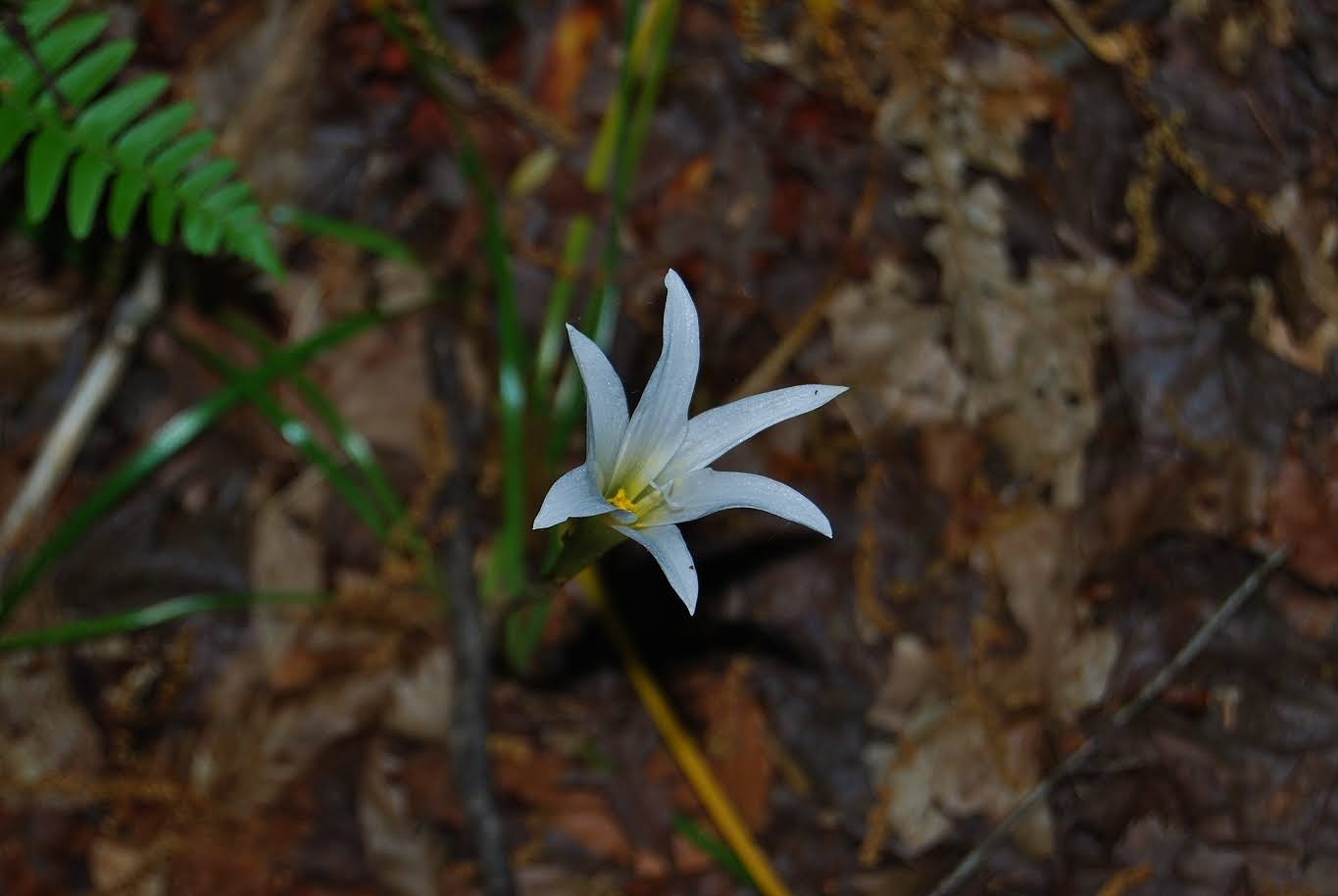
There was one lone atamasco lily and a few jack-in-the-pulpits.
We came to a parking lot where a sign indicated distances along the Mountains-to-Sea Trail.
Past here, some mountain laurel were blooming.
When we got to the old road going out to Blue Jay Point, we headed down there. A double-crested cormorant could be seen in the distance.
And there was a great blue heron near the small island.
At the point, a nesting pair of ospreys had build a nest in a tree. We spotted both of them flying around, one brought back some branches to repair the nest and the other had half a fish in his talons.
We watched the ospreys for a while and then continued on. We went a ways on Section 5 of Falls Lake Trail and then turned back.
Showing posts with label Birding. Show all posts
Saturday, April 25, 2020
Friday, December 30, 2016
Royal Palm & Flamingo
Friday, we had planned to go snorkeling at John Pennekamp Coral Reef State Park. Due to unfavorable weather, the trip was cancelled so, we instead went back to Everglades, entering at the main entrance just west of Homestead. We first stopped at the Ernest F. Coe Visitor Center, where a ranger suggested we head to Royal Palm. Arriving here, all the cars were covered in tarps.
Apparently, the resident black vultures attack cars and try to remove windshield wipers and weather stripping. There were no bungee cords left, but we were able to wrap the rental car with a tarp and close it in the car doors.
Once the car was secure, we started hiking the Anhinga Trail – a short boardwalk with lots of wildlife. Anhingas, the trail’s namesake, are very interesting birds with a long pointed beak used to spear prey. We spotted one anhinga with an impaled fish on his beak.
Now that he had caught his prey, he needed to get it off so he could eat it. Near here was a beautiful strangler fig right along the trail.
Further along we spotted a number of alligators as well as cormorants, herons, and vultures.
The open views of the Taylor Slough were just beautiful.
After finishing the short boardwalk, we then hiked the Gumbo Limbo Trail. Although both trail are right next to each other, they each explore a different landscape. While the Anhinga Trail lead through an open swampy area, the Gumbo Limbo Trail was through a dense hardwood hammock. There were several of the distinctive red-orange trees for which the trail is named.
Once we finished the trail, we headed back to the main road and continued towards Flamingo. Our next stop was the Pinelands, another short interpretive trail that led through an “island” of pine forest.
We heard lots of birds in here, but the forest was too dense for a good view. We also spotted some Bahama Senna blooming right along the trail.
Then we continued to Pay-Hay-Okee Overlook with great views of the River of Grass. Pay-hay-okee is a Seminole word for "grassy waters" and we had a nice view of the Shark River Slough from the elevated observation tower.
On the short walk back, we passed through a cypress swamp. It's just amazing how different ecosystems lie so close together.
By this time, it was getting later in the day and we were hungry so we continued to Flamingo and had lunch at Buttonwood CafĂ©. It was damaged in a hurricane and there wasn’t a lot of seating, so we were seated with a German couple for lunch. After lunch, we hiked the Guy Bradley Trail along Florida Bay to the campground.
Near the entrance to the campground was an impressive nest with two ospreys.
And a number of black vultures were drying their wings.
After some pictures, we made our way back and departed the Everglades. We had dinner in Homestead at Sake Sushi and Thai and then got packed for a flight home in the morning.
Apparently, the resident black vultures attack cars and try to remove windshield wipers and weather stripping. There were no bungee cords left, but we were able to wrap the rental car with a tarp and close it in the car doors.
Once the car was secure, we started hiking the Anhinga Trail – a short boardwalk with lots of wildlife. Anhingas, the trail’s namesake, are very interesting birds with a long pointed beak used to spear prey. We spotted one anhinga with an impaled fish on his beak.
Now that he had caught his prey, he needed to get it off so he could eat it. Near here was a beautiful strangler fig right along the trail.
Further along we spotted a number of alligators as well as cormorants, herons, and vultures.
The open views of the Taylor Slough were just beautiful.
After finishing the short boardwalk, we then hiked the Gumbo Limbo Trail. Although both trail are right next to each other, they each explore a different landscape. While the Anhinga Trail lead through an open swampy area, the Gumbo Limbo Trail was through a dense hardwood hammock. There were several of the distinctive red-orange trees for which the trail is named.
Once we finished the trail, we headed back to the main road and continued towards Flamingo. Our next stop was the Pinelands, another short interpretive trail that led through an “island” of pine forest.
We heard lots of birds in here, but the forest was too dense for a good view. We also spotted some Bahama Senna blooming right along the trail.
Then we continued to Pay-Hay-Okee Overlook with great views of the River of Grass. Pay-hay-okee is a Seminole word for "grassy waters" and we had a nice view of the Shark River Slough from the elevated observation tower.
On the short walk back, we passed through a cypress swamp. It's just amazing how different ecosystems lie so close together.
By this time, it was getting later in the day and we were hungry so we continued to Flamingo and had lunch at Buttonwood CafĂ©. It was damaged in a hurricane and there wasn’t a lot of seating, so we were seated with a German couple for lunch. After lunch, we hiked the Guy Bradley Trail along Florida Bay to the campground.
Near the entrance to the campground was an impressive nest with two ospreys.
And a number of black vultures were drying their wings.
After some pictures, we made our way back and departed the Everglades. We had dinner in Homestead at Sake Sushi and Thai and then got packed for a flight home in the morning.
Monday, December 26, 2016
Shark Valley and Big Cypress
Over the holidays, Sandy and I headed to sunny south Florida for a week
in the Everglades. We left RDU around 630 on Christmas and flew to
Miami. We arrived around 9 and stayed for the first night at an
Extended Stay America next to the airport, not the greatest hotel, but
good enough for just the evening. Monday morning, we checked out and
headed west along US-41, the Tamiami Trail. Along the way, I was just
amazed at the wildlife we saw in the canal running parallel to the
highway – alligators, herons, kingfishers and our first anhinga
sighting.
In about 20 miles, we turned into Shark Valley in Everglades National Park. This is a really popular area of the park so we arrived a little early – around 830 to ensure a parking space and bike availability. After getting our stuff together, we began bicycling the tram trail. The loop is about 15 miles total, so a little long to hike in the Florida sun, but just right for bicycling. But even on bicycles, the going was slow and certainly not because of rough terrain. The trail was paved and as flat as could be, but we stopped so many times to see wildlife. We saw lots of alligators, including some babies.
Besides being small, they are easily recognizable by their yellow stripes. And where there are babies, the mom is nearby keeping an eye on them. Alligators are one of the only reptile species where the mother watches over her young. We also saw a large number of wading birds, including great blue herons, green herons, snowy egrets, tricolored herons and more.
In the dry season, the wildlife congregates around the remaining pools of water and makes watching them great. At one such wet spot, there were a number of white ibises pecking around in the shallow water for prey.
At the half-way point on the tram trail, we parked our bikes and made a stop at the observation tower. Near the restrooms, I spotted a huge banana spider or golden orb weaver.
A tram had stopped so the observation tower was a bit crowded, but the views from up here were great. It’s no wonder why the Everglades is referred to as a “river of grass”.
Once we got some pictures, we headed back down and started to finish up the loop. Along the way back, we spotted many more birds and alligators.
There were a few juvenile white ibises, who have brown instead of white feathers. At another stop, we saw a number of wood storks. A local guy who had stopped here said it was unusual to see so many storks at once.
Near the end, one alligator had his mouth wide open showing his teeth right along the trail.
Finishing up the loop, we returned the bicycles and then walked the short Bobcat Boardwalk trail.
Then we left Shark Valley and continued heading west on Tamiami Trail. Our next stop was the Oasis Visitor Center in Big Cypress National Preserve. The boardwalk in front of the visitor center was a great spot to see more alligators basking in the sun.
At the far end of the boardwalk, a beautiful female anhinga was perched.
The Oasis center marks the southern terminus of the Florida National Scenic Trail, a more than 1000-mile trail running through the state. While we couldn’t hike it all, I wanted to hike a few miles on it while we were here. We didn’t go far though as it got really overgrown and there were lots of bugs out. We did see a few pretty butterflies though, bugs I don't mind.
The white peacock butterfly was really beautiful. And the Gulf Fritillaries have a bright orange color.
Next, we headed to the Big Cypress Swamp Welcome Center for Big Cypress. Here, we joined Ranger Lisa for a short talk about mangroves and manatees. Then we drove the Turner River-Wagon Wheel loop scenic drive and again saw many birds and gators along the canals. The Turner River runs along the canal and there were lots of birds, including gallinules and egrets.
Back on Tamiami Trail, we continued west to Everglades City and checked into our hotel – Ivey House. We had dinner at Triad Seafood Market. I had gator bites and Sandy had stone crab and we enjoyed our dinner outside and enjoyed the sunset views. Then we retired for the evening, getting in one last shower at Ivey House.
In about 20 miles, we turned into Shark Valley in Everglades National Park. This is a really popular area of the park so we arrived a little early – around 830 to ensure a parking space and bike availability. After getting our stuff together, we began bicycling the tram trail. The loop is about 15 miles total, so a little long to hike in the Florida sun, but just right for bicycling. But even on bicycles, the going was slow and certainly not because of rough terrain. The trail was paved and as flat as could be, but we stopped so many times to see wildlife. We saw lots of alligators, including some babies.
Besides being small, they are easily recognizable by their yellow stripes. And where there are babies, the mom is nearby keeping an eye on them. Alligators are one of the only reptile species where the mother watches over her young. We also saw a large number of wading birds, including great blue herons, green herons, snowy egrets, tricolored herons and more.
In the dry season, the wildlife congregates around the remaining pools of water and makes watching them great. At one such wet spot, there were a number of white ibises pecking around in the shallow water for prey.
At the half-way point on the tram trail, we parked our bikes and made a stop at the observation tower. Near the restrooms, I spotted a huge banana spider or golden orb weaver.
A tram had stopped so the observation tower was a bit crowded, but the views from up here were great. It’s no wonder why the Everglades is referred to as a “river of grass”.
Once we got some pictures, we headed back down and started to finish up the loop. Along the way back, we spotted many more birds and alligators.
There were a few juvenile white ibises, who have brown instead of white feathers. At another stop, we saw a number of wood storks. A local guy who had stopped here said it was unusual to see so many storks at once.
Near the end, one alligator had his mouth wide open showing his teeth right along the trail.
Finishing up the loop, we returned the bicycles and then walked the short Bobcat Boardwalk trail.
Then we left Shark Valley and continued heading west on Tamiami Trail. Our next stop was the Oasis Visitor Center in Big Cypress National Preserve. The boardwalk in front of the visitor center was a great spot to see more alligators basking in the sun.
At the far end of the boardwalk, a beautiful female anhinga was perched.
The Oasis center marks the southern terminus of the Florida National Scenic Trail, a more than 1000-mile trail running through the state. While we couldn’t hike it all, I wanted to hike a few miles on it while we were here. We didn’t go far though as it got really overgrown and there were lots of bugs out. We did see a few pretty butterflies though, bugs I don't mind.
The white peacock butterfly was really beautiful. And the Gulf Fritillaries have a bright orange color.
Next, we headed to the Big Cypress Swamp Welcome Center for Big Cypress. Here, we joined Ranger Lisa for a short talk about mangroves and manatees. Then we drove the Turner River-Wagon Wheel loop scenic drive and again saw many birds and gators along the canals. The Turner River runs along the canal and there were lots of birds, including gallinules and egrets.
Back on Tamiami Trail, we continued west to Everglades City and checked into our hotel – Ivey House. We had dinner at Triad Seafood Market. I had gator bites and Sandy had stone crab and we enjoyed our dinner outside and enjoyed the sunset views. Then we retired for the evening, getting in one last shower at Ivey House.
Saturday, December 28, 2013
Pocosin Lakes
I had to use up some PTO from work, so for the last weekend of the year, Sandy and I headed out to the Outer Banks for some hiking and wildlife photography. We left before 6 Saturday morning and made our way east along US-64 towards our first destination – Pocosin Lakes National Wildlife Refuge. The sun was coming up as we reached Plymouth and took NC-45 towards the entrance to the Pungo Lake unit of the refuge. From the turn off NC-45, we took Refuge Road to the maintenance compound and turned left on Van Staaldulnen Road. At the end we turned right on South Pungo Road and then left on Hyde Park Road. At this time of year when the migratory waterfowl are in the refuge, this is the only route to Pungo Lake. The other roads are gated. If you are visiting, I would highly recommend bringing a map from the Fish & Wildlife Service that shows which roads are open and which are closed. It would be easy to get lost in the refuge with all the gated roads and Google Maps or GPS are of no real help. At the end of Hyde Park Road, we stopped at the Pungo Lake Observation Platform and Charles Kuralt Trail Site and got our first view of Pungo Lake.
There were a tremendous amount of tundra swans on the lake and even though they were mostly on the other side of the lake, the sounds of their honking was quite loud. We got some pictures from here and then drove to down South Lake Road to the trailhead for Duck Pen Wildlife Trail. This half-mile trail follows a gravel road out to Pungo Lake Observation Point, a photo blind on the lake.
We were a little closer to the birds from here and got some pictures hidden from view. Although there were a lot of birds here, I don’t think it had quite peaked yet.
I did manage to get some nice pictures, including a few of the swans running along the surface of the water as they took flight.
We headed back along the trail and Sandy saw something move in the distance. Bears are very common in the refuge, but using the zoom lens, I could see this was a deer.
We walked ahead especially carefully, but as we got closer, she took off into the swamp. From here, we left the refuge and got back on the highway.
It was getting towards lunch time by now and we had woken up very early, so we headed to Pettigrew State Park and had lunch in the picnic area.
We walked down to the boat dock on Lake Phelps and could hear the swans, but they were quite far away.
So we hiked along the Moccasin Trail west to the overlook to try and get a better look. This trail runs along the north shore of the lake, but there is a dense swampy forest between the trail and the lake, which blocked views of the lake for most of the trail.
There were a couple of openings with views of the lake and some very large cypress trees. But these openings were few and far between. In a couple of places along the trail, the flora is so dense, it creates a completely covered tunnel to hike through.
In just under three miles, we reached the Moccasin Overlook.
A boardwalk leads from the trail out to the lake through a beautiful swamp of bald cypress trees draped in Spanish moss.
At the overlook, we were a bit closer to the swans, but still a good ways.
We rested for a bit at the overlook and got some pictures of the swans and the beautiful trees and Spanish moss and then headed back.
From here, we headed to the rest of the way to the Outer Banks. Just over the bridge, we stopped in Nags Head at Wings. Normally, they’re a bit overpriced, but in the off season, everything was 50% off or more so we picked up some bathing suits and beach hats that we won’t have to buy this season when they’re much more expensive. I called D, our Airbnb host, and told him we would be on the way. We checked in with him, unpacked our stuff, and chatted for a bit. Then we headed into town to Pigman’s Bar-B-Que for dinner. We both had pulled pork and it was very good. After dinner, we got to bed early after a very long day.
There were a tremendous amount of tundra swans on the lake and even though they were mostly on the other side of the lake, the sounds of their honking was quite loud. We got some pictures from here and then drove to down South Lake Road to the trailhead for Duck Pen Wildlife Trail. This half-mile trail follows a gravel road out to Pungo Lake Observation Point, a photo blind on the lake.
We were a little closer to the birds from here and got some pictures hidden from view. Although there were a lot of birds here, I don’t think it had quite peaked yet.
I did manage to get some nice pictures, including a few of the swans running along the surface of the water as they took flight.
We headed back along the trail and Sandy saw something move in the distance. Bears are very common in the refuge, but using the zoom lens, I could see this was a deer.
We walked ahead especially carefully, but as we got closer, she took off into the swamp. From here, we left the refuge and got back on the highway.
It was getting towards lunch time by now and we had woken up very early, so we headed to Pettigrew State Park and had lunch in the picnic area.
We walked down to the boat dock on Lake Phelps and could hear the swans, but they were quite far away.
So we hiked along the Moccasin Trail west to the overlook to try and get a better look. This trail runs along the north shore of the lake, but there is a dense swampy forest between the trail and the lake, which blocked views of the lake for most of the trail.
There were a couple of openings with views of the lake and some very large cypress trees. But these openings were few and far between. In a couple of places along the trail, the flora is so dense, it creates a completely covered tunnel to hike through.
In just under three miles, we reached the Moccasin Overlook.
A boardwalk leads from the trail out to the lake through a beautiful swamp of bald cypress trees draped in Spanish moss.
At the overlook, we were a bit closer to the swans, but still a good ways.
We rested for a bit at the overlook and got some pictures of the swans and the beautiful trees and Spanish moss and then headed back.
From here, we headed to the rest of the way to the Outer Banks. Just over the bridge, we stopped in Nags Head at Wings. Normally, they’re a bit overpriced, but in the off season, everything was 50% off or more so we picked up some bathing suits and beach hats that we won’t have to buy this season when they’re much more expensive. I called D, our Airbnb host, and told him we would be on the way. We checked in with him, unpacked our stuff, and chatted for a bit. Then we headed into town to Pigman’s Bar-B-Que for dinner. We both had pulled pork and it was very good. After dinner, we got to bed early after a very long day.
Subscribe to:
Posts (Atom)


